
Bob decides When Enough is Enough

One busy Friday night around 2007, mid-way through my bartending career at Fanelli’s, I was working alongside Joel, a handsome Fort Greene hipster artist in his early thirties, newly hired for weekends.
At some point that evening, I caught a glimpse of him leaning over the bar to engage two attractive young women. They sat picking at the margaritas I’d just made, looking less than thrilled. Earlier, when they’d ordered, they hadn’t picked up on my sarcastic suggestion to keep it simple—like a shot.
It came as no surprise when Joel, after a quick glance my way, scooped up their drinks and remade them. Finishing the glasses with a proper salt rim—standard for margaritas—he threw me another look before turning back to charm the girls.
From the corner of my eye, I watched a tide of scarlet rise from their necks as they pulled long draws through their straws.
Then, unexpectedly, as they lifted their heads to breathe, the bar fell into a rare lull. In the quiet, I overheard one of them gush, “This drink is so much better.” Gesturing in my direction, she added, “What is it with your friend that he makes such a poor drink? And such a goofball.”
While I pretended to scrub the bar, Joel smirked and said, “Bob is okay.”
Then, shaking his head, he added, “Bob’s pretty famous in Soho—he went the distance in a boxing match with the heavyweight champ, but…” Then as if to give further explanation, he raised his hand and tapped his temple with a finger.
Joel’s regulars were artist peers, many of them migrating from Williamsburg—Brooklyn’s version of Soho—where rising rents and wine bars had priced out aspiring painters, writers, and actors. A large portion of his so-called friends lived in cheaper, cooler Fort Greene and found it easy, and cheaper, to hop on the Q or R train to Fanelli’s, where Joel took good care of them—if you know what I mean.
His crowd, especially the women—often new to the City—were smitten with the “artist” behind the bar. Joel’s eye rolls as he remade drinks I had supposedly botched, or at my self-effacing humor, often drew nervous glances from customers who were not comfortable with his steerage of me to the position of laughing stock for their entertainment. At those moments, Joel, realizing he might’ve gone too far, would grin over as if I were in on the joke.
Of course, close friends and the few who truly knew me understood that inviting underestimation was a survival skill I’d honed. Therefore ,I’d just go about my business.
But one day Joel, entertaining a handful of bar gals, pushed it further and using me as the butt of his jokes more than usual. I didn’t catch exactly what he said, but I saw the women look away in embarrassment. Joel, noticing too, grew uneasy. He saddled up beside me and said, “Bob, anytime you don’t appreciate my jokes, you can tell me to stop.
”
With a wide grin, I informed him, “Oh, you’ll stop when I want you to stop.”
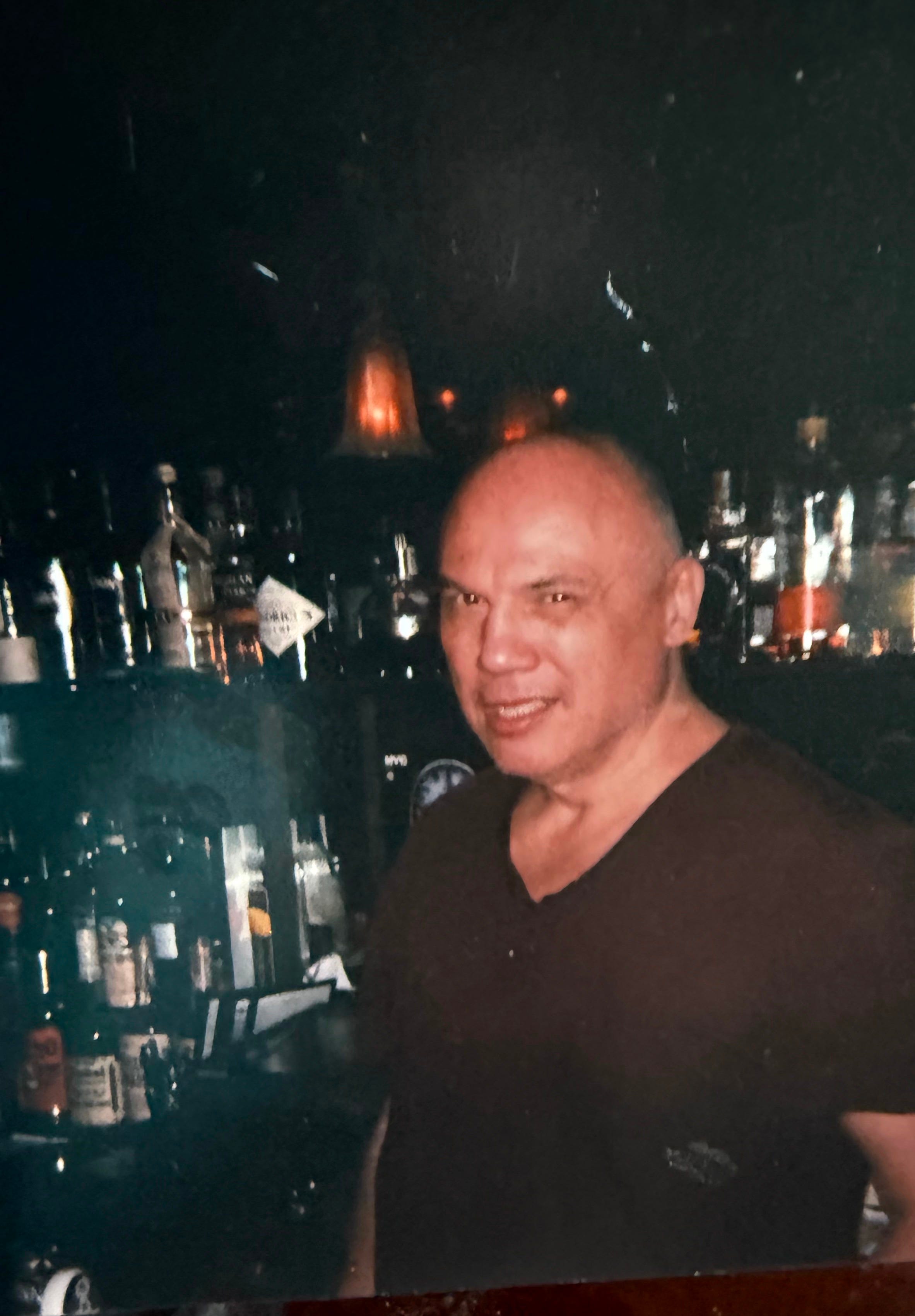
This is the guy I remember.
I don’t remember this young whippersnapper. He must not have been around very long. For good reason.